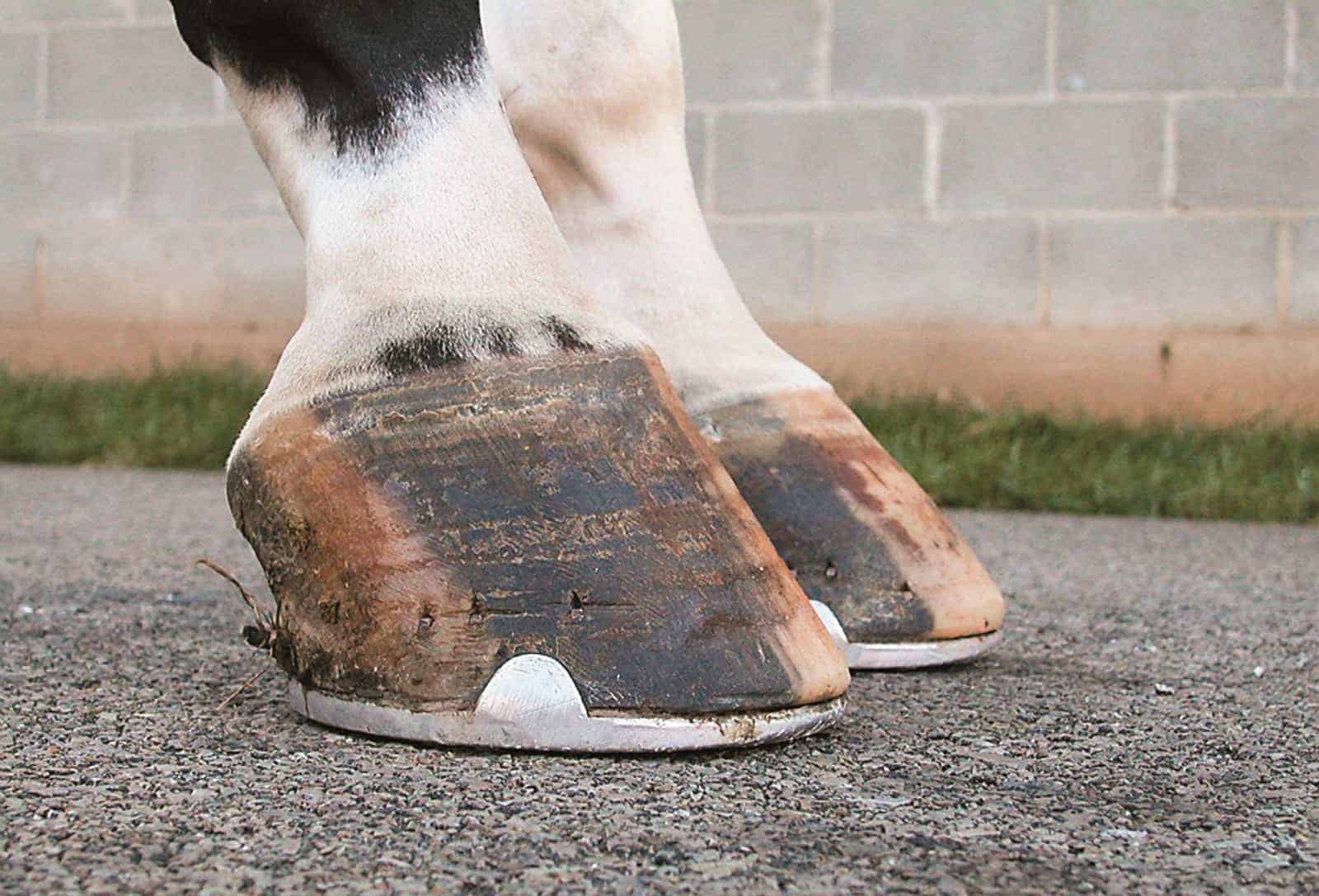
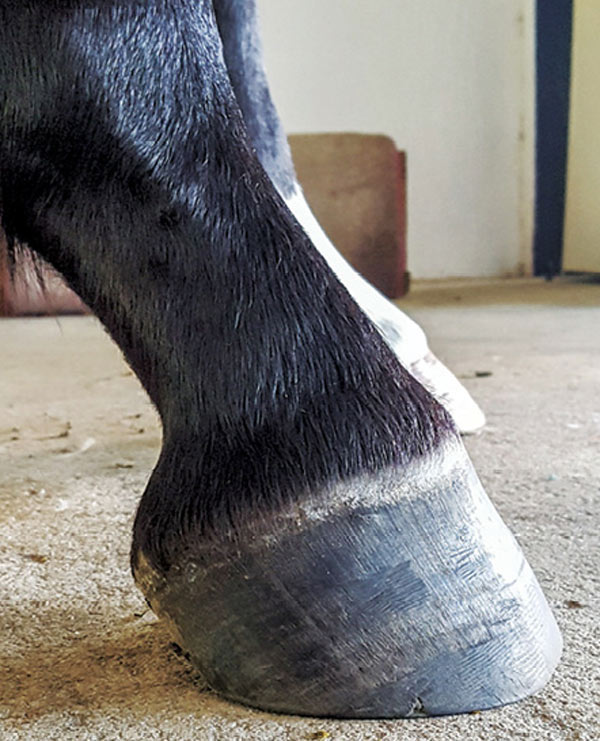
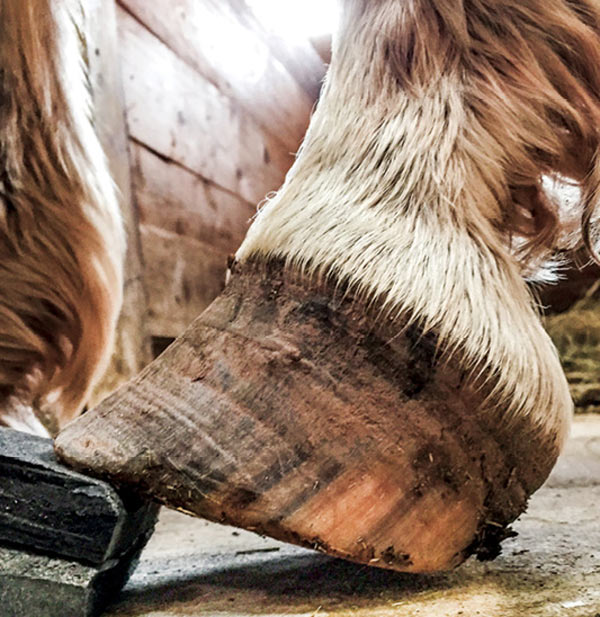
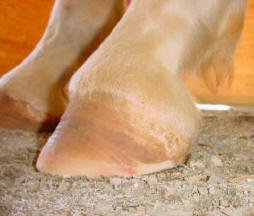
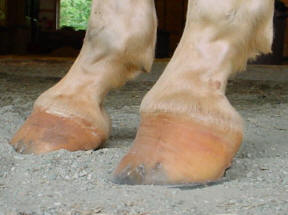
It can affect one or both limbs usually in the fore limbs. Farrier simon curtis wants everyone to know that a club foot is not the same thing as an upright foot.
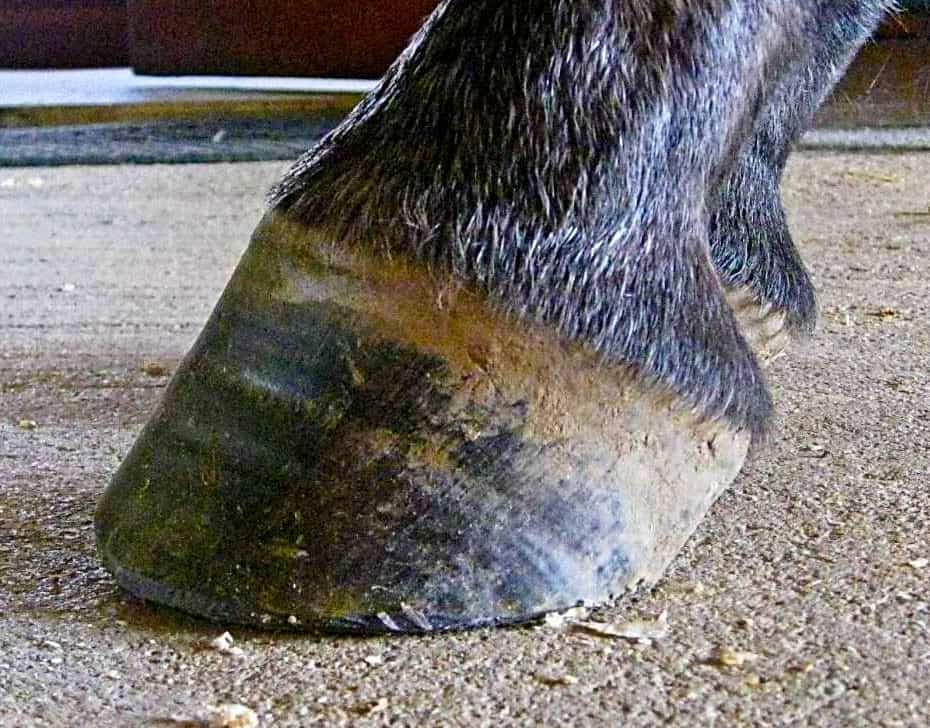
The Tolerable Club Foot The Horse
Impacts the standing or movement of your young horse.
Club foot horse definition. Grades 1 to 4 as follows: Congenital talipes equinovarus is sometimes referred to as club foot. Contracture of the flexor muscles and deep digital flexor back tendon (which attaches to the coffin bone inside the hoof) results in the horse.
Club foot happens because the achilles tendon (the large tendon at the back of the ankle) is too short. A stick or bat used to hit a ball in any of various games. With respect to the club foot, the heel of the affected foot grows faster and the hoof more upright in appearance due to most of the horse's weight being placed.
My goal is to begin with the basic external parts of the hoof and progress to the internal workings of the foot. Talipes refers to the foot and ankle. Radiographic changes in the navicular bone of normal horses.
The front legs bear about 60 percent of the weight of a horse. Talipes is made up of the latin talus (ankle) + pes (foot). Early treatment should correct it.
Most horsemen define a club foot as hoof and pastern angle of more than 60 degrees, making the foot more upright than normal. Clubfoot is twice as common in boys. Clubfoot is caused by a shortened achilles tendon, which causes the foot to turn in and under.
The common (classic) form of clubfoot. Club foot occurs in less than 0.5% of births. Healthy horses stand at rest with weight equally distributed on both front legs.
In club foot, 1 foot or both feet point down and inwards with the sole of the foot facing backwards. There are four grades of club foot. By then, the joint surfaces, bone shapes, muscles, tendon and ligament lengths have become more set in their ways.
Clubfoot is a deformity in which an infant's foot is turned inward, often so severely that the bottom of the foot faces sideways or even upward. Club foot is defined by the uc davis book of horses as a flexural deformity of the coffin joint resulting in a raised heel; This may lead to pain and difficulty walking.
If a horse puts more weight on the inside of a hoof, the blood is pushed to the opposite side of the foot causing faster growth and wearing down the weighted surface at a faster rate. In half of the babies with club foot, both feet are affected. Club foot (also called talipes) is where a baby is born with a foot or feet that turn in and under.
Radiographic imaging of the equine foot, vet clin north am equine pract 2003, 19: “i have a bit of a bee in my bonnet because people are forever saying ‘an upright. [noun] a heavy usually tapering staff especially of wood wielded as a weapon.
Radiography and radiology of the equine foot, in proceedings 50th british equine veterinary assn congress 2011, 50: The affected foot and leg may be smaller than the other. Cases of contracted heel can be primary or secondary.
With this type of clubfoot, the foot is turned in sharply and the person seems to be walking on their ankle. Turner ta, kneller sk, badertscher rr, et al. In primary cases, contracted heel is a result of unbalanced feet or overgrown hoofs.
Treatment is necessary to correct clubfoot and is usually done in two phases — casting and bracing. Shortening of the tendon that is attached to the coffin bone. A club foot alters a horse’s hoof biomechanics, frequently leading to secondary lamenesses.
Contracted heels in horses sometimes are mistakenly called club foot. A true club foot is significantly more upright than the other hooves, or the angles of both hoof walls are steeper than the angles of the pasterns. These are in fact two different conditions but have a lot in common and the result is similar.
Approximately 50% of cases of clubfoot affect both feet. The severity of the problem is commonly graded on a four. The affected hoof is usually stumpy with a short toe and long, upright heel.
I want to help you visualize everything in the horse's hoof, understand the relationship between the parts and learn to read the clues the hooves have to offer. This is undesirable because the steep angle of the horse's hoof will not only change the way it moves but also makes the horse prone to foot and leg lameness. Most of the time, it is not associated with other problems.
Not to be confused with the club foot deformity of humans.. This is the first of many pages displaying horse hoof anatomy pictures. Approximately one infant in every 1,000 live births will have clubfoot, making it one of the more common congenital (present at birth) foot deformities.
Clubfoot is a birth defect where one or both feet are rotated inward and downward. Coronary band may bulge as the deformity progresses. Symptoms of club foot in horses.
Lameness in the foot or leg will cause pointing. pointing refers to a state of rest with one foot positioned about 10 to 12 inches ahead of the other in an effort to reduce weight on the affected side. Without treatment, the foot remains deformed, and people walk on the sides of their feet. Making the distinction is the first step toward resolving a club foot, he says.
It is more common in boys than girls. Children with clubfoot should be able to take part in regular daily activities once the condition is treated.
Club Foot
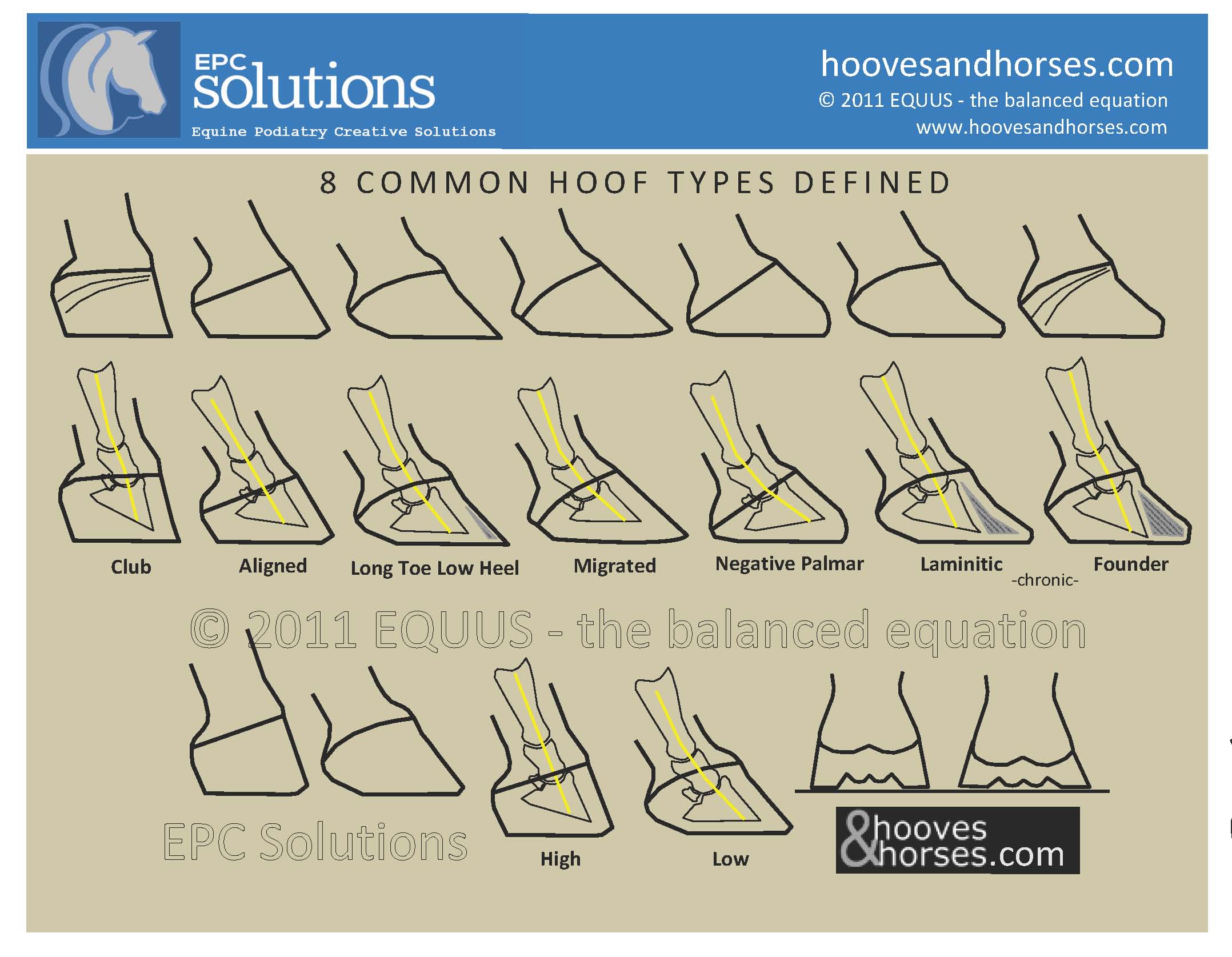
8 Hoof Types Explained

Understanding Club Foot - The Horse Owners Resource
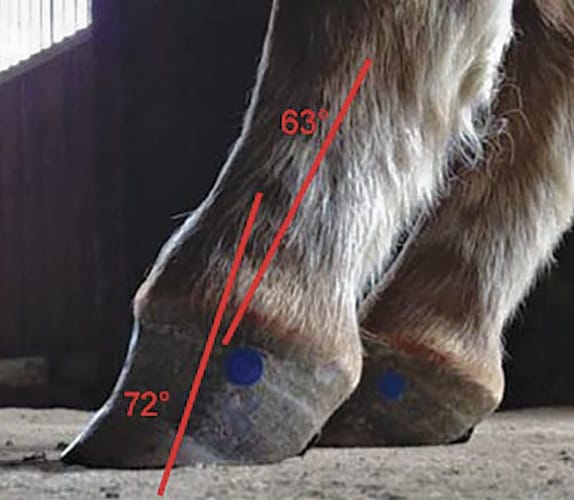
Defining And Fixing A Horses Club Foot
2

Ballerina Syndrome Where The Heels Remain Off The Ground Even At The Download Scientific Diagram
Managing The Club Foot The Horse
Club Foot Or Upright Foot Its All About The Angles

Defining And Fixing A Horses Club Foot
Equine Therapeutic Farriery Dr Stephen Ogrady Veterinarians Farriers Books Articles
Club Foot Or Upright Foot Its All About The Angles

Club Foot Or Upright Foot Its All About The Angles
So-called Club Foot By James R Rooney Dmv

Clubfoot Pdf Pied Medecine Clinique


Understanding Club Foot - The Horse Owners Resource
Clubfoot Pdf Pied Medecine Clinique

Club Foot

Passing The Club Foot Exam
Club Foot
Comments
Post a Comment